2024—a year of certifications and partnerships!
Countdown
by 2025

PPC Insights
First Security Certification in the CLS Sector – BSI Selects PPC for the BSZ Pilot Process Under TR-03109-5 (January)
Right at the start of the year, PPC was approved for the pilot program for Accelerated Security Certification (BSZ) for CLS and HAN components under BSI TR-03109-5. TR-5, adopted at the end of 2023, ensures basic protection and interoperability at the CLS interface between smart meter gateways (SMGWs) and controllable loads, submetering, and other applications at end-customer sites. Spoiler Alert: We also successfully completed the certification in September! (More details to follow)
PPC Successfully Passes the Audit Conducted by Netze BW GmbH and EnBW AG (February)
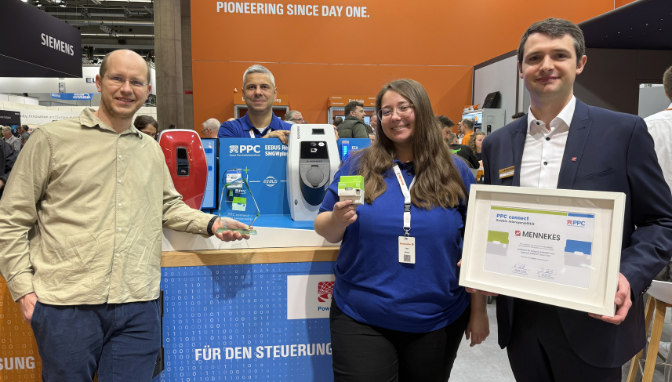
In February 2024, we successfully passed the audit conducted by Netze BW GmbH and EnBW AG. The official conclusion took place on February 21 during E-world 2024 in Essen. By successfully completing the audit, we have paved the way for further strengthening our trusting and long-term partnership. In addition, this achievement demonstrates our commitment to the highest quality standards and our role as a technology leader.
Successful certification of thenew production facility provides the capacity needed to scale up the smart meter rollout (February)
The certification process for our new production lines in Landau was formally completed in February with the presentation of the certificate. This means the new facility has been approved by the Federal Office for Information Security (BSI) for the production of certified SMGWs. With the capacity expansion at the new location to over 1.5 million SMGW per year, we are ensuring that our customers have access to the quantities they need as the rollout of smart metering systems scales up. The way is now clear for a smooth scaling of the smart meter rollout.
So much for the “cursed 7th year”—the biggest customer gathering yet, featuring customers and partners for the first time (June)
Over 200 participants, 15 exhibition partners, countless encounters, discussions, and knowledge-sharing sessions. That’s how we can briefly summarize our 7th Customer Meeting on June 11 and 12. For two days, we engaged in direct dialogue with our customers and partners. The focus was on the implementation of Section 14a of the Energy Economy Act (EnWG)—what’s already working today and what the future holds. We’d like to thank all our partners, participants, and, of course, the speakers for their engaging presentations, their keen interest and dedication, and for two unforgettable days of fruitful exchanges in Mannheim. We’re already looking forward to the 2025 PPC Customer Meeting, which will take place on May 21 and 22, 2025.
From Visionto Reality: 1,000,000 Smart Meter Gateways (September)
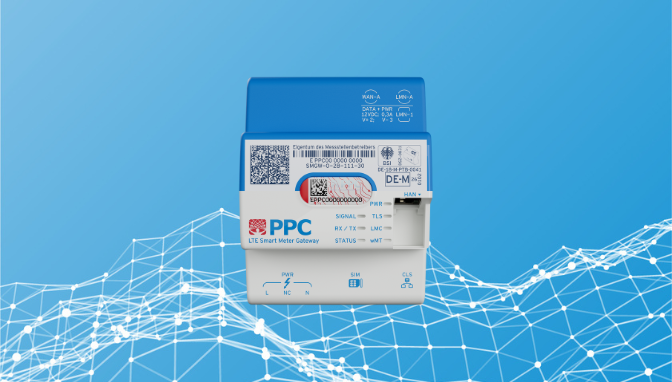
As early as 2012, our vision was clear: the digital transformation of the energy transition. After years of intensive work and the initial certification of our SMGW in 2018, the smart meter rollout is now underway Let’s get going. To ensure we can achieve this in Germany, we’ve significantly increased our production capacity in recent years. As a result, we were able to roll out one million SMGWs by September! We view the smart meter rollout as a necessary step, as it lays the cybersecurity foundation for market and grid integration. So our goal is clear: we’ve only just reached the first million of 20 million in the full rollout.
Double Victory: PPC Becomes First Company to Certify a CLS Product According to BSZ and TR-5 (October)
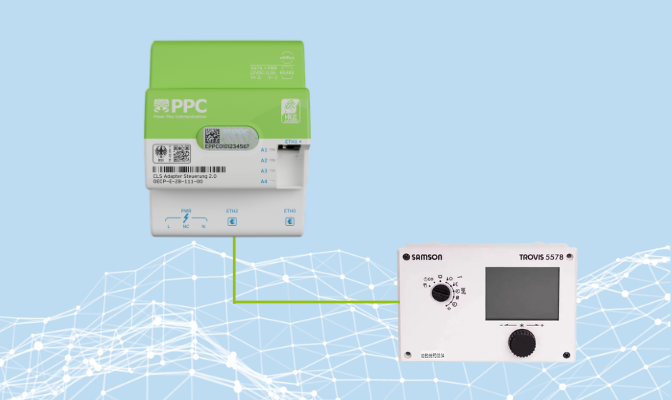
October got off to a great start for our CLS team, as PPC became the first company to receive certifications for BSZ procedures and TR-5 for CLS submetering adapters! By completing these certifications, PPC is ensuring legal and planning certainty in the CLS environment. The requirements for certifying CLS gateways were formalized by the BSI in December 2023, thereby establishing standards for interoperability and cybersecurity for all market participants. As a component of critical infrastructure, this dual certification not only strengthens confidence in security for end customers and grid operators but also drives the standardization of the interface between the grid and the end customer.
PPC Simplifies SiLKe – SMGWs Certified for the MSB Supply Chain (December)
In early November, the BSI, in collaboration with the “Secure Logistics Chain” project group of the VDE’s Network Technology/Network Operations Forum (FNN), developed and published a catalog of requirements for the “MSB supply chain .” In order for a metering point operator (MSB) to be able to handle the delivery of SMGWs independently upon receipt of goods, this delivery option must be specified in the SMGW manufacturer’s certification documentation. PPC immediately incorporated this option for efficient delivery into the further development of its smart meter gateway and successfully completed the certification process for it on December 4.
PPC Connect:Interoperability in Action
Home power plant experts from E3/DC and SMGW pioneer PPC successfully put Section 14a (Standby Requirements) to the test (February)
As of January 1, 2024, new requirements have taken effect pursuant to the amended Section 14a of the Energy Industry Act (EnWG). The grid operator must be able to throttle new controllable consumption devices to a power output of 4.2 kW. In February 2024 , experts from both companies conducted tests on E3/DC’s home power plants, their integrated energy management system, and PPC’s interoperable iMSysplatform, experts from both companies demonstrated in tests conducted in February 2024 that users not only meet the new requirements of Section 14a but will also be able to utilize additional market-related applications as well as those that benefit the grid and the system in the future.
TMZ Successfully Implements Network and Fault Management for Smart Metering Systems (February)
Just in time for Valentine’s Day, PPC and CubyLink GmbH (a company of the HORIZONTE Group) announced a groundbreaking partnership aimed at integrating WAN network management (NMS) and fault management in smart metering. This will simplify fault resolution processes, ensure operational transparency, and unlock efficiency potential in the rollout and operation of smart metering systems (iMSys). The partnership was initiated by TMZ Thüringer Mess- und Zählerwesen Service GmbH and aims to create a seamless integration of both companies’ leading market solutions for the efficient operation of iMSys.
PPC and Zählerhelden Set New Standards with the Rollout of Thousands of CLS Devices (February)
The rollout of CLS devices has also picked up significant momentum this year. As the SMGW market leader, we—together with the metering point operator Zählerhelden from Dornstadt—have committed to jointly installing several thousand CLS gateways starting in April 2024. In addition to implementing Section 14a of the German Energy Act (EnWG) for end users, the joint solution focuses on other applications of market- and grid-oriented control. With this large-scale rollout, both companies aim to clearly demonstrate that control via the iMSys is already a viable use case today.
eSystems and PPC Implement a Production-Ready § 14a Comprehensive Solution (June)
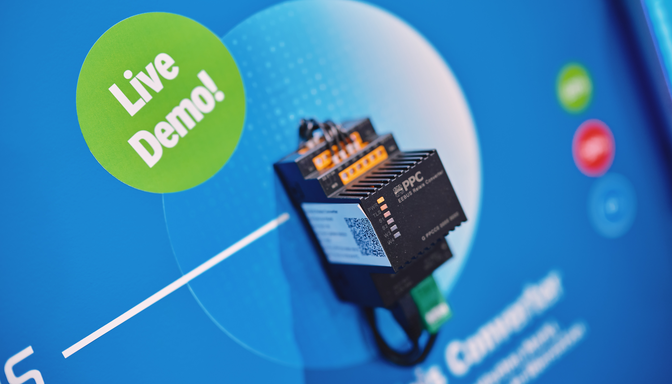
In June, eSystems, a manufacturer of smart wallboxes, and PPC demonstrated how their products can be used to continuously adjust the charging power of electric vehicles. The wallbox’s power output is reduced to up to 4.2 kW—as required by Section 14 of the German Energy Economy Act (EnWG). Instead of prototypes, only production units are used, and communication takes place via the EEBUS standard. During testing at the eSystems site in Wendlingen, a PPC SMGW and CLS gateway were used along with the ghostONE smart wallbox from eSystems. We plan to continue this collaboration in the future and further simplify and advance the implementation of Section 14a.
BOSCH Home Comfort, Robotron, and PPC Are Digitizing Heat Pump Controls (June)
As part of a collaboration between BOSCH Home Comfort, Robotron, and PPC, a Bosch heat pump (model Compress 5800i AW) was controlled via the EEBUS protocol using a CLS gateway from PPC. The control command was issued from Robotron’s aEMT system. The heating system is thus ready for continuous control in accordance with Section 14a of the German Energy Economy Act (EnWG) and can be operated based on market or grid-related considerations. In light of current and future developments, it has become clear what enormous potential this opens up for companies in energy distribution as well as for competitive and incumbent metering point operators in this sector. By utilizing standardized digital communication, aggregators can effectively tap into the flexibility resources of the heating transition and actively contribute to the decarbonization of the heating sector.
You can find more interoperability projects through our PPC connect initiative.
Innovation drives us forward
The WARAN Project is driving the heating transition and digitizing the district heating network (January)
It’s been underway since January 2024! WARAN supports the digital transformation of the heating industry. The partners—BTC, FfE, EWE NETZ, be.storaged, swb Erzeugung, wesernetz Bremen, and PPC—from the fields of metering point operations, heating network operations, generation, aggregation, research, as well as hardware manufacturers and system service providers, are working toward the goal of developing the entire iMSys infrastructure for integrating power-to-heat systems and for controlling in-home stations in districtand local heating networks, and to test it in field trials. Initial laboratory tests will take place shortly at BTC, followed by field trials at EWE Netz in Bremen and Rostock.
Project SISSY Makes Taxes Under Section 14a Accessible to the General Public (February)
The SISSY innovation project was successfully launched at the turn of the year. The focus of this project, funded by the BMWK, is on further developing the smart metering system into a central, secure, and scalable gateway at the controllable grid connection point. The standards created in this way will soon make control in accordance with Section 14a of the Energy Economy Act (EnWG) possible for large numbers of units, thereby ensuring cost-effectiveness. The project partners are EGS, TMZ, Robotron, KEO, EEBUS, and PPC. In early November, SISSY turned its attention to real-world labs, conducting test cases at TMZ and E.ON Grid Solutions, as well as in the Living Lab of the EEBUS Initiative.
Technical Breakthrough for Electric Mobility at unIT-e² (August)
As part of the unIT-e² project, which was launched in 2021, Schneider Electric, Ford, and PPC are collaborating within the Cit-E-Life cluster. The goal is the efficient and safe integration of electric mobility into the urban power grid. In August 2024, a laboratory test evaluated a hypothetical grid operator requirement for the temporary reduction of charging power. The process implemented during the test demonstrated how different systems and manufacturers can work together seamlessly to enable efficient and reliable control of electric mobility. This was a significant step forward for the unIT-e² project!
Regulatory Perspectives
TR-5 Adopted (December 2023)
The BSI TR-03109-5 was finalized by the Federal Ministry for Economic Affairs and Climate Action (BMWK) at the end of 2023. The so-called TR-5 provides a secure foundation for the market launch of CLS components, with the established guidelines—through the standards created—supporting all stakeholders in quickly gaining a foothold and moving forward. The requirements of TR-5 took effect on January 1, 2024, and will thus guide the industry throughout the entire year of 2024. In early January, PPC was approved for the pilot program for accelerated safety certification (BSZ) of CLS and HAN components under BSI TR-03109-5. Further details will follow.
Grid-Oriented Control under Section 14a of the Energy Industry Act (EnWG) (January)
On January 1, 2024, Section 14a of the Energy Industry Act (EnWG) took effect. For distribution system operators, this means they must be able to dim flexible low-voltage consumption devices in acute grid congestion situations. This new regulation poses significant challenges for our customers, which is why PPC has developed several options for implementing Section 14a. Together with gridX, we have compiled an FAQ that answers our customers’ most pressing questions.
Guidance on the Demand Response Network Code (May)
As early as 2022, the European Commission had tasked the European Union Agency for the Cooperation of Energy Regulators (ACER) with drafting a directive on demand response to support grid operators in their work. On May 8, 2024, ACER received the electricity transmission system operators’ proposal for an EU-wide Demand Response Network Code. The draft also includes amendments to the three related electricity network codes: Balancing, Network Operation, and Customer Connection. ACER subsequently conducted a public consultation in September for all stakeholders in the energy sector.
Key Changes in the MsbG Amendment (October)
Earlier this year, a BMWK report on Section 48 of the Metering Point Operation Act (MsbG) showed that the industry is still being held back by a number of technical and economic challenges. To accelerate the rollout—and likely also to adapt the law to the realities faced by metering point operators—an amendment to the MsbG was rushed through in October 2024. This amendment has attracted a great deal of attention on social media, even though it has not yet been passed.
Enactment of the Cyber Resilience Act (October)
The issue had been on the table for months, and in the fall, the time had finally come: On October 22, 2024, the European Cyber Resilience Act for hardware and software was passed. This strengthens the European cybersecurity architecture and ensures a minimum level of cybersecurity for all connected products on the European market. Specifically, the new law means that cybersecurity is incorporated right from the development stage of hardware and software.
Requirements Catalog for the MSB Supply Chain (November)
Just in time for Halloween, the BSI has published the new requirements catalog for the MSB supply chain. Was the industry expecting something spooky? Not at all. The requirements catalog was developed in collaboration with the SilKe project group of the VDE Network Technology Forum (FNN). The goal: to simplify the secure delivery of SMGWs and establish a comparable level of security for all metering point operators (MSBs) during delivery. The document, published in late October, serves as the basis for each MSB’s individual security concept.
End of the “Traffic Light” Coalition: What Does This Mean for the Energy Sector? (November)
On November 6, 2024, the “traffic light” coalition collapses following the dismissal of Federal Finance Minister Christian Lindner by Federal Chancellor Olaf Scholz. Germany must realign itself politically, and new elections are on the horizon. But what does this mean for the energy sector? The current cabinet draft to amend various laws—such as the MsbG, EEG, and EnWG—is expected to introduce significant changes. The current government’s timeline remains unclear. It remains to be seen when these laws will be passed…
Conclusion:
The year 2024, with all its changes, challenges, and, of course, successes, has flown by! On the path to the tax rollout, we further developed both our SMGW and CLS products and successfully obtained certification for them. Through the PPC connect interoperability initiative, PPC has maintained its collaboration with strong partners to ensure broad interoperability across the entire iMSys. It remains to be seen how 2025 and the as-yet-unknown new government will impact the energy transition. One thing is certain: PPC continues to work on the digitalization of the energy transition.
Smart and secure at the edge!
Let’s TAKE OFF together in 2025!
We would like to thank our customers and partners for their excellent and successful collaboration and for the trust they have placed in us—we wish you all the best and continued success in 2025!