The Challenge: Parallel Infrastructure for Electricity and Heat
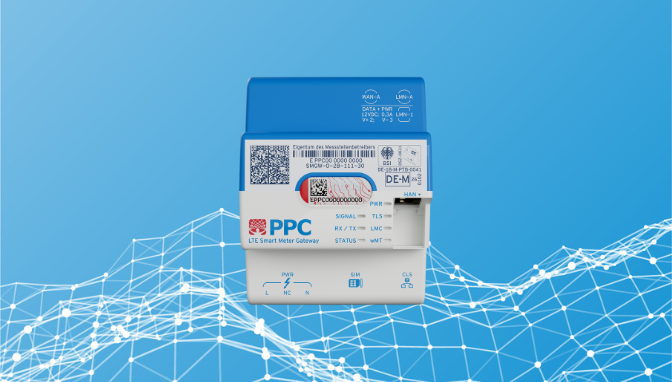
While the smart meter gateway (SMGW) is already being rolled out across the entire electricity sector, the heat supply sector still relies on its own separate communication infrastructure. In district heating, various communication technologies are used for this purpose—mostly narrowband technologies.
In practice, this means that for a property, in addition to the Smart Meter Gateway for the electricity sector, an additional infrastructure for heat metering and other applications must be set up. Parallel structures not only result in higher investment and operating costs but also increase the complexity of installation, IT operations, and maintenance. Furthermore, narrowband technologies are often not robust enough for innovative applications in district heating, such as the remote control of building transfer stations.
So why not use a unified infrastructure to transmit measurement data, control and status values, as well as other applications from both sectors, in a cyber-secure and digital manner?
The Approach: Using the CLS Channel for Heating Applications
This is where a current project between KT-Elektronik (a subsidiary of SAMSON AG) and PPC comes in.
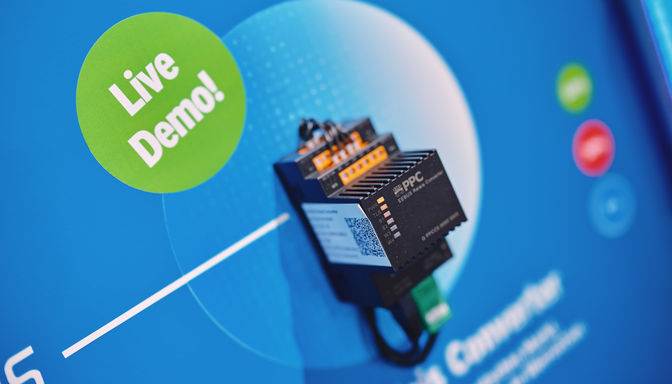
Working together, a SAMSON heating controller was connected to a backend system via the PPC CLS adapter. The smart meter gateway ensured data transmission and thus the connection to the customer’s backend.
A heat controller, such as the SAMSON TROVIS 5578 in this case, uses the SMGW’s WAN connection to communicate with a backend system. In this instance, that system is SAMSON’s own “SAM District Energy.”
The BSI-regulated communication infrastructure of the SMGW, established through the smart meter rollout, is thus being consistently further developed for district heating applications.
As a result, this means:
One cyber-secure channel per property—across all sectors.
Coordinated communication processes and standardized architecture
The connection between the SAMSON heat controller and the SMGW+CLS was successfully tested in the lab.
This involved the following collaborative efforts:
- The architecture between SMGW, the CLS adapter, and SAMSON heat controllers had to be specified, and technical adjustments implemented.
- The necessary communication processes were coordinated.
- Data transmission to the backend was tested and is functioning stably.
This demonstrates technical feasibility. For SAMSON and PPC, it was crucial to take the next steps in innovation here. The pilot project can show municipal utilities a way to integrate rollouts across multiple divisions in the future, making them more cost-effective and faster.
Conclusion: The SMGW is becoming an overarching communication platform
This once again highlights that the Smart Meter Gateway will be able to offer added value in the future that goes far beyond its core functions in the electricity sector. The SMGW is becoming a cross-sector communication platform.
For energy suppliers and municipal utilities, this means the following in the long term:
- Elimination of parallel communication structures
- Reduction in hardware and mobile service contracts
- Standardized installation processes
- Uniform security architecture
- Foundation for integrated multi-utility strategies
Especially at a time when efficiency, cybersecurity, and regulatory compliance are equally critical, this consolidation can be a major strategic advantage.