
While digitalization in the electricity sector has already gained momentum, the heating sector is still proceeding cautiously. There is a lack of transparency in local and district heating networks, a lack of control mechanisms to increase flexibility, and a lack of an integrated, holistic view of electricity and heat. As part of the WARAN research project, EWE NETZ, BTC, wesernetz Bremen, swb Erzeugung, be.storaged, SWR AG, the FfE, and PPC aim to advance these issues in municipal heat supply—specifically regarding sector coupling and digitalization—through a unified and standardized iMSys infrastructure.
Mannheim / Oldenburg / Bremen / Munich / Rostock, January 25, 2024: Therollout of smart metering systems has finally gained momentum. The technology has proven itself, new processes have been established, and obstacles have been identified and overcome. However, the electricity sector is currently almost the sole beneficiary of this development in infrastructure expansion. For municipal heat planning and its implementation, however, sector coupling and flexible energy use in local and district heating are of paramount importance. This sector is currently considered largely undigitized, even though heat generation in Germany accounts for over 50% of final energy consumption. Yet the integrated optimization of heating networks and buildings offers exceptional potential for flexibility and efficiency—provided the necessary control mechanisms are in place. The need is great. With the decline of coal-fired CHP plants, new generation structures—such as large-scale heat pumps for district heating—are needed, which require significantly greater flexibility and more control at the customer level.
This is an issue that the newly launched WARAN project, initiated as part of the DigENet II call for proposals, aims to address. The name itself already reveals the goal: “Connecting heat and utilizing it for the benefit of the grid.” The consortium of partners—BTC, FfE, EWE NETZ, be.storaged, swb Erzeugung, wesernetz Bremen, and PPC—from the fields of metering point operation, heat network operation, generation, aggregation, research, as well as hardware manufacturers and system service providers, aim to develop the entire iMSysinfrastructure for integrating power-to-heat systems and for controlling home stations in district and local heating networks, and to test it in field trials. This not only lays the foundation for advancing the necessary digitalization of the heating sector but also, through sector coupling and the integrated optimization of heat supply and consumption, paves the way for climate-neutral heating and thus provides an effective lever for achieving climate goals.
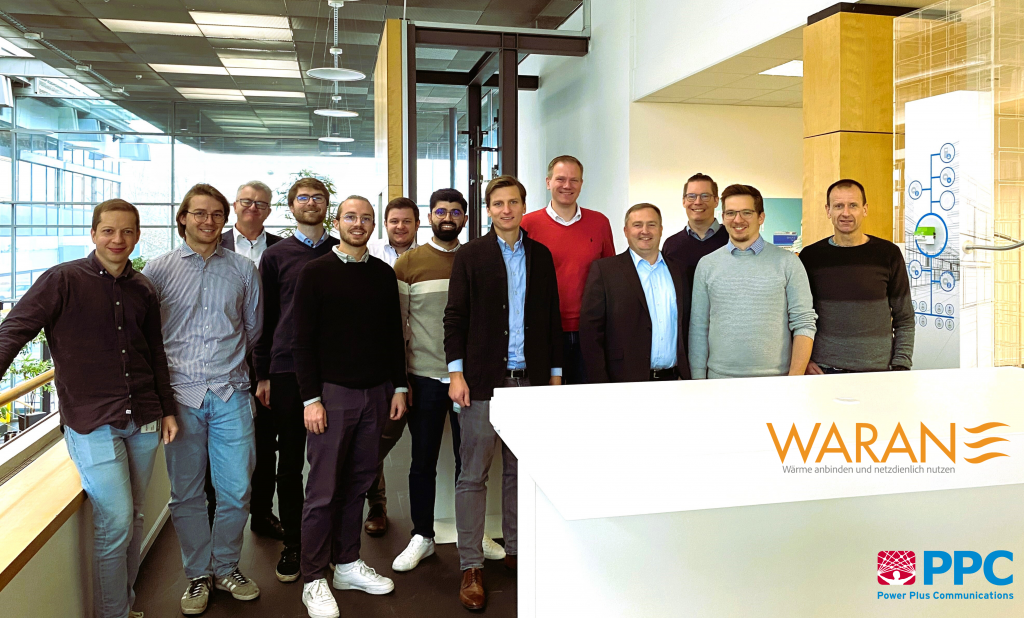
Figure 1: Project meeting in Mannheim
Eyes and Ears for Germany’s Heat Transition
The fundamental need to digitize the heating sector has recently been reflected in regulatory changes, whether in the GNDEW, the FFVAV, or the key provisions of the BNetzA’s newly adopted Section 14a of the Energy Industry Act (EnWG). Furthermore, the Building Energy Act (GEG), in combination with the Heat Planning Act, sets the course for a climate-neutral heat supply. The aim is to ensure that the heating sector consistently relies on renewable energies, thereby enabling the ambitious decarbonization goals to be achieved. Heat pumps and the transformation and expansion of heating networks play a key role in this effort. WARAN is thus responding to the dynamic developments in regulation to structure further advancements in systems and processes. Just as in the electricity sector, the heating sector is also becoming transparent and controllable. Grid and metering point operators, as well as heating network operators, can monitor, control, increase flexibility, and optimize their operations in a more targeted manner.
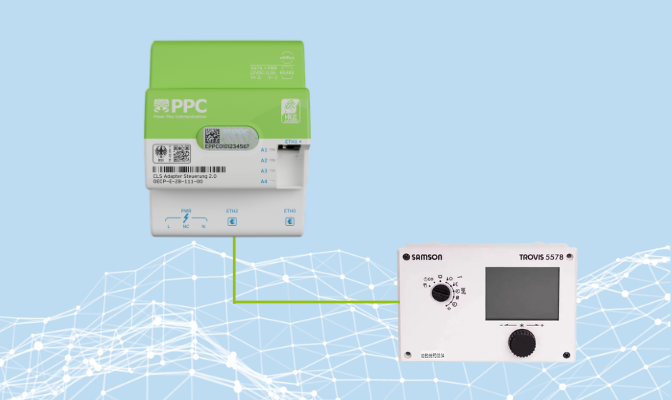
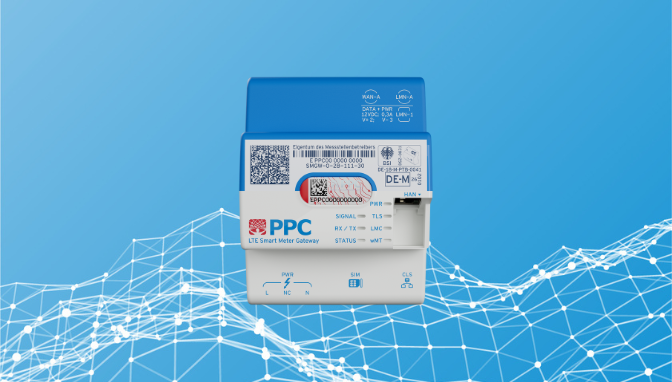
Specifically, the goal is, on the one hand, to connect and control electricity-to-heat systems—such as heat pumps—to the iMSys infrastructure currently under development for grid, system-supporting purposes, and, on the other hand, the optimized connection of heating networks to buildings via transfer stations to tap into flexibility potential. This is achieved via the CLS communication channel of the smart meter gateway. (Home) energy management systems (HEMS) and gateway administration (GWA), as well as external market participants (EMT), virtual power plants, and metering point operators, must be connected and integrated into their respective processes. Following a laboratory phase, the results will be tested in a subsequent real-world laboratory. Finally, the further developments will be consolidated via the standardized iMSys infrastructure in combination with power-to-heat systems and heating networks and considered as a holistic approach to sector coupling.
Furthermore, leveraging the flexibility of heating networks and power-to-heat systems serves as the starting point for developing future value-added services on the iMSys infrastructure. To this end, the consortium will identify regulatory and commercial issues and develop potential solutions in collaboration with committee and standardization partners from industry and research, with the aim of directly incorporating these into future roadmaps. WARAN’s concepts and field trials will thus feed directly into the further development of the technical and regulatory framework.
Complex supply chains require competent partners
To successfully implement such a large-scale project in the heating sector, it is essential to involve dedicated and experienced partner companies in all key aspects. EWE NETZ contributes its expertise as a metering point and grid operator and also provides the field test environment for integrating power-to-heat systems into low-voltage grids. With their district heating networks and the hybrid balancing power plant (HyRek), wesernetz and swb Erzeugung provide more than just a field test environment. They also contribute the necessary expertise on sector coupling between electricity and heat and on the operation of district heating networks to the project, which is crucial for connecting to the iMSys infrastructure. The Oldenburg-based company be.storaged is responsible for the development of value-added services as well as local optimization via the HEMS. As an associated partner, SWR AG contributes its technical expertise in grid and metering point operations for laboratory and field tests. BTC will work closely with the consortium leader, PPC, as the provider of the Virtual Power Plant (VPP) and as the system provider for GWA and EMT systems for laboratory and field testing. The focus here will be on the further development of the CLS system units to meet the specific requirements of the heating sector. FfE will provide scientific support throughout the project and take the lead in developing the use cases to be tested.