
Niestetal / Mannheim, April 29, 2025 — This is what true interoperability looks like: SMA, the inverter specialist based in Niestetal, and PPC, the Mannheim-based smart meter gateway manufacturer, have jointly developed a groundbreaking solution that enables not only new photovoltaic systems but also existing systems throughout Germany to be controlled in a grid-friendly manner via a firmware update —and thus ready for the smart grid of the future.
More than 350,000 systems in one fell swoop
As a pioneer in smart energy management, the Sunny Home Manager 2.0 has been in use since 2012. With over 350,000 devices now installed, it serves as the central interface for many households, enabling the efficient use of solar power and controllable loads.
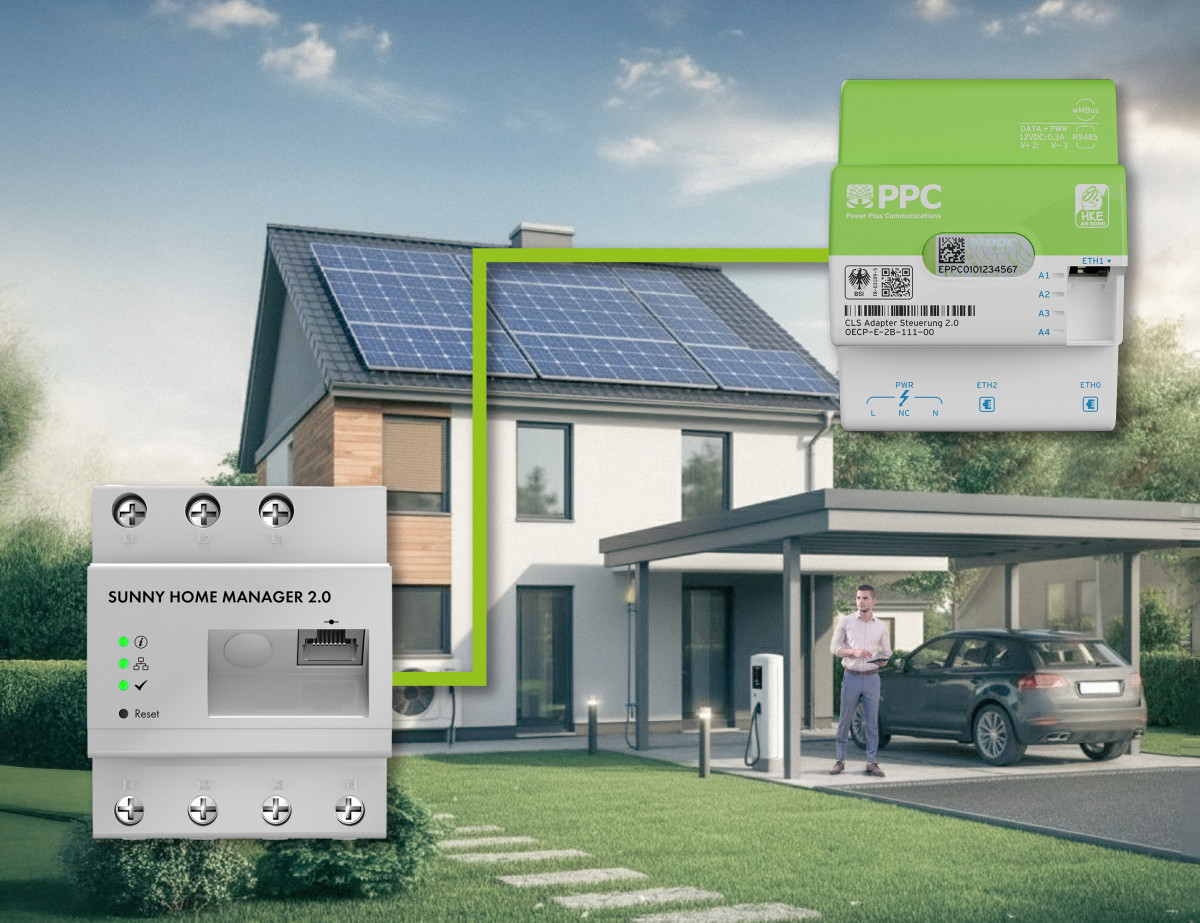
Working in close collaboration, SMA and PPC have combined their expertise to efficiently implement the requirements of Section 14a of the Energy Industry Act (EnWG) and Section 9 of the Renewable Energy Sources Act (EEG) not only for new installations but also for existing PV systems—without the need for any additional hardware replacement. Compatibility is conveniently enabled via a software update to the Sunny Home Manager. In combination with a smart metering system, all requirements for PV systems are successfully met.
Smart Control—Without Compromising Convenience
At the heart of the technical integration is the interaction between PPC’s CLS adapter—certified according to TR-03109-5 and BSZ—and SMA’s Sunny Home Manager. While the CLS adapter is responsible for receiving and securely and standardly transmitting the control signals, the Sunny Home Manager ensures their intelligent and flexible implementation within the household’s energy system.
This allows controllable loads—such as wallboxes and heat pumps—as well as controllable generation sources—such as PV systems—to be managed not only in a way that benefits the grid, in accordance with the specifications of grid operators and market participants, but also optimized for energy efficiency in the interest of system operators—all without compromising comfort.
Seamless Communication via the EEBUS Standard
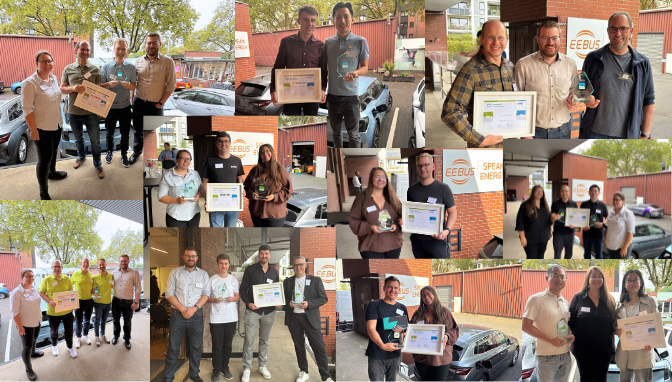
The standardized EEBUS protocol forms the basis for error-free communication. As part of the latest update, the use cases critical to Section 14a—consumption monitoring (MPC) and consumption limiting (LPC)—were successfully implemented. The proven interoperability was delivered to SMA devices via a software update in April 2025. As a result, these devices are now available—in combination with a smart metering system—as a solution for a flexible smart grid.
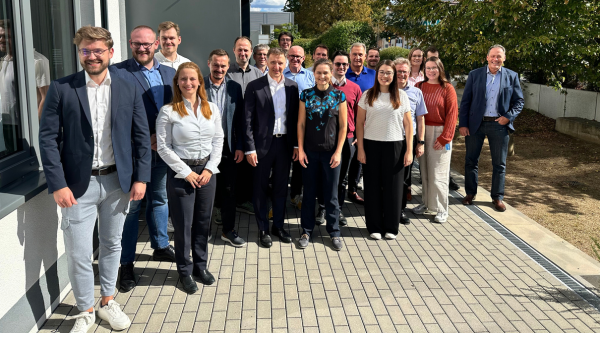
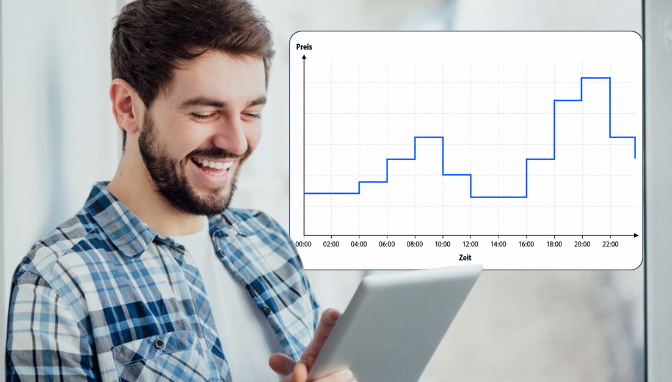
“At first glance, this expansion may seem unremarkable, but it is a crucial step for the power grids of tomorrow—whether they want to receive grid fees through voluntary participation, benefit from dynamic rates, or must meet regulatory requirements. Our successful collaboration with PPC is a key building block for this grid-optimized control of our customers’ systems. We’re excited to embark on this exciting journey with a strong partner like PPC to help shape the future of energy,” said Falko Schmidt, Product Manager for the Sunny Home Manager at SMA.
“The fact that our collaboration will enable nearly 400,000 households to be intelligently integrated into the grid in the future is a great achievement,” explains Julian Zilg, Deputy Team Leader for CLS Products at PPC. “The fact that existing systems can be connected simply via a software update also demonstrates the potential of digital control and that an interoperable approach pays off.”
Section 14a is by no means the end of the story
The next steps are already planned: By the end of 2025, a further update will also implement Section 9 of the EEG—another milestone in the control system rollout. This will allow existing plants to be controlled in a targeted and dynamic manner in the event of grid overloads, rather than being uniformly limited to 60% of their rated output. Grid overloads are thus efficiently avoided—in line with the principles of smart grid integration.
SMA and PPC are thus demonstrating how grid-friendly control can be implemented efficiently and in an interoperable manner even in existing installations—an important contribution to the stability and digitalization of tomorrow’s energy system.