Power Plus Communications AG on the Path to Energy Transition 2.0
Countdown
through 2024
Highlights from Berlin and the World of Regulation
GNDEW in the Cabinet: Rollout in Germany Gets Underway (January)
A key milestone in 2023 was the introduction and passage of the Act on the Relaunch of the Digitalization of the Energy Transition (GNDEW). This groundbreaking law sets binding targets for the nationwide rollout and, with its smart grid approach, provides a blueprint for all of Europe. Nearly 20 million installations are expected by 2032.
BNetzA Strengthens Standards – Just a Starting Point, or Even a Springboard? (July)
With this new document, the BNetzA has aligned its draft from February of this year on energy-related data (ERD) with the specifications of the GNDEW and clarified any ambiguities. At its core, the issue concerns which data is “grid-relevant, balancing-relevant, or billing-relevant”—and thus enjoys a particularly high level of protection and, for this very reason, must be transmitted via the SMGW’s WAN interface. All other data is considered “operational data” and can optionally be transmitted via the SMGW or via a second WAN connection (e.g., customer Wi-Fi).
Revised Measurement and Calibration Ordinance: Reducing Bureaucracy in the Smart Meter Rollout and Eliminating the January Peak (September)
The amendment to the Measurement and Calibration Act has paved the way for an indefinite calibration period and, consequently, for the long-term operation of smart meter gateways, opening the door to new possibilities. Updates and new features provided throughout the SMGW’s lifespan will thus become predictable and represent a clear economic benefit. A high-performance hardware platform is an essential prerequisite for utilizing them. Previously, the calibration period for the devices was 8 years, which meant that the devices had to be replaced after this period for legal reasons. In addition, update processes for the SMGW’s firmware were time-consuming due to additional, upstream approvals at the state level, which often resulted in updates not being performed at all or being delayed.
Two more important milestones for our company at the end of the year…
The long-awaited clarification regarding Section 14a was issued by the BNetzA (November)
It took some time, but then a clear signal was sent… At the end of November, the regulations governing the integration of controllable consumption devices and controllable grid connections pursuant to Section 14a of the Energy Industry Act (EnWG) were finally adopted by the Federal Network Agency (BNetzA) and will take effect on January 1, 2024. A large portion of future SMGW installations will be based on this regulation and will significantly influence our developments in the SMGW sector and in CLS solutions.
A lengthy legal proceeding comes to the hoped-for conclusion (December)
The BSI TR-03109-5 has been finalized by the BMWK. TR-5 provides a secure foundation for the market introduction of CLS components; the established guidelines will support all stakeholders in quickly gaining a foothold and making progress through the standards created therein. The document clearly outlines interoperability and security requirements as well as implementation guidelines for Section 14a, energy management systems (EMS), and the Heating Costs Ordinance (HkVO). In the future, guaranteed interoperability will be ensured through the communication adapter, thereby eliminating the need for special requirements for downstream devices. This keeps the CLS landscape flexible and pragmatic in product design for applications and customizations. Further development in the CLS area can thus maintain a rapid pace in the future and agilely incorporate insights gained from practical operation. Naturally, we have long been working to standardize the implementation of these requirements for our application partners, making them simple and accessible.
Following the resolution on Section 14a and TR-5, the final groundwork was laid just in time for the end of the year. Nothing now stands in the way of the cyber-secure digitalization of the energy transition in 2024, and all decision-makers who previously had reason to hesitate can now move forward with confidence.
PPC Insights
PPC Expands Its Executive Board with CTO Janosch Wagner (January)
The addition of Janosch Wagner to the Executive Board as Chief Technology Officer (CTO) underscores our ambition to drive technological innovation and accelerate the development of new solutions to address the challenges of the energy transition.
From “Dumb” Grids to Smart Grids (March)
The transformation of conventional power grids into smart grids is the focus of the ZVEI study “Power Grids of the Future,” which we support. It demonstrates that the digitization of distribution grids is crucial to ensuring a reliable supply and the active participation of end customers. We are focusing on the “smartification” of the grids to manage the planned expansion of electric mobility and heat pumps by 2030.
Long-standing partners formalize their collaboration: PPC joins EEBUS e.V. (May)
Following a long and successful collaboration on numerous projects, we are now also an official member of EEBUS e.V. This further strengthens the synergy between our product portfolio and EEBUS as a protocol for applications both upstream and downstream of the grid connection.
SMGW 2.0 – The Most Reliable and High-Performance Platform for the Digital Transformation of the Energy Transition (May)
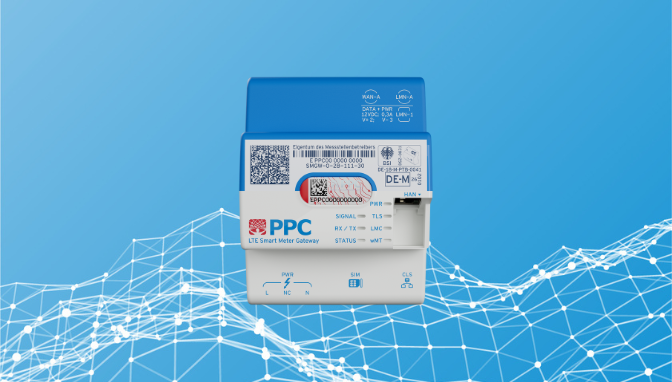
The next generation of the Smart Meter Gateway (SMGW 2.0) made its debut at E-world 2023 in May. As the most powerful platform for the digital transformation of the energy transition, it offers advanced solutions and also focuses on value-added solutions in the CLS application area. With the SMGW 2.0, we are strengthening our portfolio for the agile rollout path outlined in the GNDEW and, together with you, are seizing the opportunities presented by the implementation of Section 14a of the Energy Industry Act (EnWG).
Powerline Week 2023 in Mannheim at PPC and Our Joining of the Nessum Alliance (September)
Powerline Week 2023 in Mannheim became a key gathering place for experts and interested parties to discuss and advance the latest developments in the field of powerline communication. 52 participants, many liters of coffee, 26 ° in September. We came away with great insights from the 5 days! Another success: Our participation in the Nessum Alliance (formerly the HD-PLC Alliance) is part of a long-term strategy to further develop and improve our communications portfolio. We develop useful solutions for the rollout and offer our powerline customers valuable benefits in terms of performance and cost savings.
PPC Fleet Goes Fully Electric (November)
Smart metering is the key to the digital energy transition. Driven by this firm conviction, we support our partners and customers every day in achieving their expansion and digitalization goals. For us, it goes without saying that, as a company, we embrace the energy transition wherever we can. That is why, since 2019, we have consistently relied on electric mobility for the PPC vehicle fleet. In four years, the fleet has transitioned from an initial 20 diesel vehicles to 17 fully electric cars and five hybrid models.
2023 Customer Meeting and Production Tour – An Event That Brings People Together (November)
Following a warm welcome from CEO Ingo Schönberg, our 6th customer meeting began on Wednesday, November 8, 2023, at the PPC offices and then continued in Landau at the new production facility. Thomas Wolski began by outlining the day’s agenda, which featured a new addition this year: an exclusive lineup of concurrent, interactive workshop sessions with a hands-on approach. All relevant topics were covered, presented, and discussed over the course of the two days: from CLS to BPL solutions, our new network management system, SiLKe, business models for iMSys, and the introduction of SMGW 2.0. There was something for everyone. A special highlight was the tour of Production Hall 2 at our manufacturing partner WEPTECH elektronik GmbH in Landau. The guided tours of the new building—which will serve as an additional production facility for SMGWs—gave participants the opportunity to experience the individual production steps, which are carried out under strict safety regulations. We were also proud to announce our roadmap for 2024, which includes, among other things, the impressive goal of delivering 1 million SMGWs, successful TR-05 certification, and the expanded implementation of direct control from the SMGW.
A Look Back at the 2023 Customer Meeting
Sustainability with a Long-Term Perspective (December)
Building on the assessment criteria of the German Sustainability Code (DNK), we as a company strive to transparently demonstrate what we have already achieved—and what we still aim to achieve—in terms of economic, environmental, and social issues for the future. For this reason, with our assessment in the form of our 2022 DNK Report, we aim to take significant, targeted steps to continue making our contribution to a sustainable future. As a diversified company with a diverse workforce and range of departments, we are convinced that the many facets of the DNK can help us in the sustainable development of our company—from the value chain and resource management to improving the local community.
Successful Together
Coneva and PPC Successfully Integrate Energy Management System with iMSys via CLS (May)
Following the passage of the law to relaunch the digitization of the energy transition, we are demonstrating—in collaboration with coneva, a Munich-based technology service provider specializing in decentralized energy management—the successful integration of energy management systems into the smart metering system. As part of this collaboration, the coneva EMS has been integrated as a software component on the CLS gateway. This is a pioneering achievement that enables end customers to actively participate in the energy transition.
iRLMSys – Smart Meter for Industry Coming Soon (August)
The proportion of RLM metering points equipped with a smart metering system will increase significantly in the coming years. To drive development in this segment, five companies in the industry have joined forces: E.ON, Netze BW GmbH, Robotron Datenbank-Software GmbH, Landis+Gyr GmbH, and we have tested an intelligent, recording load profile measurement system (iRLMSys) for industrial, commercial customers, and large generation facilities—in which RLM meters are connected via smart meter gateways while simultaneously taking into account the specific technical and economic conditions of this market segment. The partners have demonstrated that this solution is market-ready, offers a high level of security, and will be available in the near future. The tested solution aligns with the approach pursued by standardization bodies and will be further optimized as part of the specification process. Interoperability, standardization, and rapid availability are of the utmost importance to all partners.
This is what 1:n looks like in practice—co.met connects 21 utility companies in Saarbrücken via a smart meter gateway (August)
A scalable rollout requires the ability to connect multiple meters via a smart meter gateway. It is crucial that data reception and transmission meet the same quality and security standards as in a point-to-point connection. The advantage of the new “1:n solutions” is that they operate wirelessly with over 50 meters, eliminating the need for complex RS485 cabling. This practical solution is now being implemented in Saarbrücken. As the responsible metering point operator, co.met will both install the devices and serve as the smart meter gateway administrator. In collaboration with the meter manufacturer eBZ and using our smart meter gateways, 30 modern WD3 metering units are now being installed in a 21-unit apartment building.
SMGW 2.0 Kicks Off at Thüga SmartService (August)
Our Smart Meter Gateway 2.0 has been certified by Thüga SmartService, and we look forward to continuing our successful collaboration! We are ready for the future and ready to deliver added value! The platform’s sustainability is also a key driver behind the development of our second-generation smart meter gateways. The SMGW 2.0 offers the performance needed for a sustainable rollout and provides more performance reserves for the agile further development of functions in accordance with GNDEW.
PPC and EnQS Launch Joint Testing Environment for Interoperable iMSys Applications (September)
The application areas of today, tomorrow, and the day after tomorrow—whether in submetering, e-mobility, or energy management—will require simple yet secure access to energy industry data. The collaboration with EnQS is reflected in a joint test environment for interoperable smart metering systems. This initiative helps to consolidate standards and ensure the seamless exchange of data.
Direct Marketing via iMSys: Interoperable, Market-Oriented Control (September)
Controllable systems are one of the key drivers for a successful energy transition. After all, they allow us to tap into vast, previously untapped flexibility in the grid to integrate decentralized generators and volatile consumption peaks with minimal losses. In this process, prosumers must not only be integrated in a way that benefits the grid from the outset, but they must also be brought on board through market-oriented control mechanisms. Synergies between hardware, software, and infrastructure are crucial for the successful, cost-effective implementation of direct marketing. These requirements served as the starting point for the collaboration between Swistec, Next Kraftwerke, MeterPan, and us. While the control options in the current rollout had previously been viewed with a focus on grid benefits, the partners are now testing how the same infrastructure can also be used for the direct marketing of generation plants under 100 kW.
Unlocking Flexibility with EEBUS – EnQS and PPC Fully Integrate the EEBUS Communication Standard into the CLS Gateway (September)
Together with the IoT service provider EnQS, we have fully integrated the EEBUS communication standard into our CLS Gateway. In the long term, this will enable properties to establish uniform communication with numerous applications. Such a standard not only simplifies the connection itself—it also serves as the foundation for new business models and operational options, such as the control of heat pumps.
Heat meters successfully integrated into iMSys in collaboration with Belimo and Robotron (October)
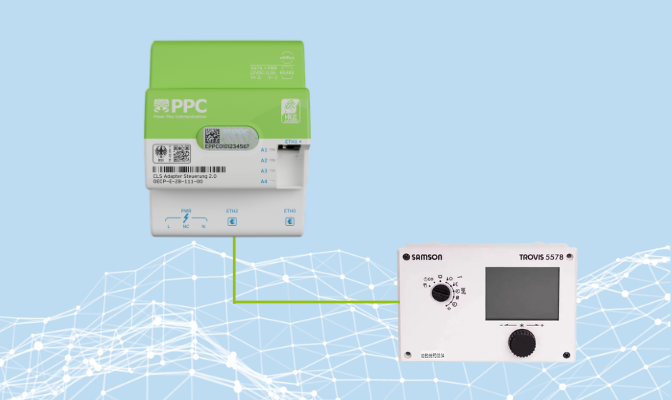
The requirements of the Heating Costs Ordinance are becoming increasingly relevant—not only for the traditional housing sector itself, but also in the commercial real estate and industrial sectors. Meters and existing systems are often used in these sectors that are less common in the housing sector and therefore must be connected via different protocols. In a lab test, Belimo and we—with support from Robotron—tackled this challenge by connecting Belimo’s heat meter to the Energiewelt system and any other infrastructure via the CLS interface of the smart metering system. This success demonstrates that even meters and sectors outside the scope of submetering solutions—which are currently the focus of the residential real estate sector—can be quickly and easily integrated into the smart metering system.
Submetering via CLS: 500 submeter adapters are now in use in the field (November)
DIGImeto, QUNDIS, and we are demonstrating that CLS submetering is ready for a large-scale rollout. The solution offers multi-utility metering for electricity, gas, and district heating, as well as BSI-compliant submetering via our smart meter gateway. DIGImeto is using 500 CLS adapters for this purpose , while QUNDIS is providing the complete and proven submetering infrastructure. The system enables the reading and transmission of submeter data from properties and is future-proof in accordance with the Heating Costs Ordinance and BSI-TR-03109-5.
Innovation
CACTUS Project Launch – Connect, Assist & Control: Transparency and System Stability for Smart Energy Systems (January)
For the energy transition to succeed, it is not enough to simply convert as much of the electricity generation capacity as possible to renewables. It is also necessary to decarbonize the transportation and heating sectors. Once a sufficiently large portion of electricity generation has been converted to renewables, this can best be achieved through the electrification of transportation and heat generation. With this increasingly rapid shift of energy flows from fuel and heating networks to the electric grid, the challenges are growing—especially for distribution system operators—because the new consumers are primarily connected to the low-voltage grid. Currently, low-voltage grids are operated “blind”—without real-time measurement data from the grid, the only response to these new challenges is a resource- and cost-intensive expansion of the distribution grids “down to the last kWh.” Power Plus Communications AG aims to develop and test an alternative to this approach in the CACTUS project—in the form of a solution for real-time monitoring of the low-voltage grid, which will serve as the foundation for further applications (forecasting, control, etc.) within the overall project.
SECProMo Project Launch – Secure Energy Management Through Control of Prosumers via the Smart Meter Gateway and Reusable Service Modules (February)
Thursday, February 9, marked the official launch! The SECProMo research project aims to control prosumers via the SMGW—while testing the feasibility of secure energy management and reusable service modules. The entire process chain of the CLS interface will play a major role here. The project is funded by the Federal Ministry for Economic Affairs and Climate Action. Our partners in this project are Osnabrück University of Applied Sciences, items GmbH & Co. KG, Stadtwerke Bielefeld GmbH, Arvato Systems, ZENNER Hessware, and smartOPTIMO GmbH & Co. KG.
unIT-e² Launches Field Test to Increase Flexibility in Grid-Optimized Control (May)
The unIT-e² research project is moving from the laboratory phase to the practical phase. In the project’s subcluster called Harmon-E, test subjects have now been successfully equipped with a digital grid connection consisting of SMGW and HEMS. This means that the controllable grid connection can now be tested in real-world operation within the context of Section 14a. The project expects this to yield new insights into the necessity of control interventions and to provide valuable information for grid monitoring.
Launch of the energy data-X project (October)
The project’s mission is to build a sustainable data ecosystem for the digital interconnection of all market participants. The goal is to promote the energy transition by creating a shared data space for innovative, data-driven business models, as well as standardized, efficient data exchange within the energy sector and with adjacent sectors. Data security and individual decisions regarding data exchange are reliably ensured in accordance with the European Gaia-X standards. Our subproject within the project consists of integrating the SMGW infrastructure into the Energy Data Space.
Launch of the Waran Project (December)
It’s time to really ramp up the heat transition! Digitalization in the electricity sector has finally gained momentum, but when it comes to heating, the energy sector is still playing it by ear: The heating network lacks transparency, heat pumps can usually only be controlled analogously, and potential for flexibility remains untapped. And this is despite the fact that regulatory hurdles are currently being removed through the GEG and Section 14a. The WARAN research project aims to tackle these issues as part of the DigENet II funding call. The goal is, on the one hand, to connect electricity-to-heat systems to the iMSys via the CLS channel for data acquisition and control, and, on the other hand, to connect district heating networks in accordance with the FFVAV via the iMSys. The prototypes developed will be directly tested in subsequent field trials. WARAN will support the heating industry in laying the groundwork for digitalization now and in reaping the benefits of the future infrastructure.
Conclusion: On the Path to a Sustainable Energy Transition 2.0
In 2023, Power Plus Communications AG made significant progress toward a sustainable energy transition. Through groundbreaking technologies, strategic partnerships, and a clear vision, we are making a significant contribution to overcoming the challenges of the energy transition and creating a sustainable energy infrastructure. With SMGW 2.0, CLS, and our other communication solutions, we are positioning ourselves as pioneers on the path to smart and efficient energy systems—and now the regulatory course has also been set for progress!
There was already plenty to tackle in 2023—now let’s HIT THE GROUND RUNNING together in 2024!
We would like to thank our customers and partners for their excellent and successful collaboration and for the trust they have placed in us—we wish you all the best and continued success in 2024!