





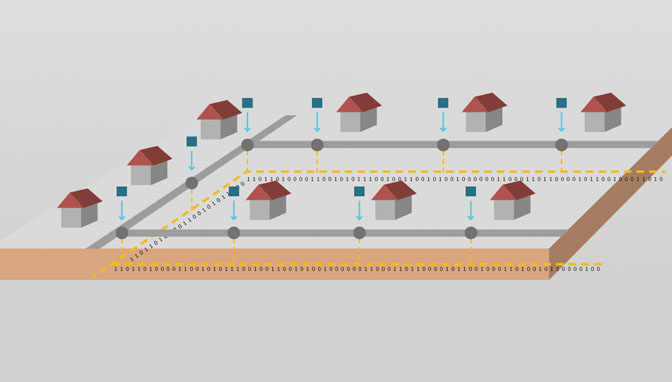






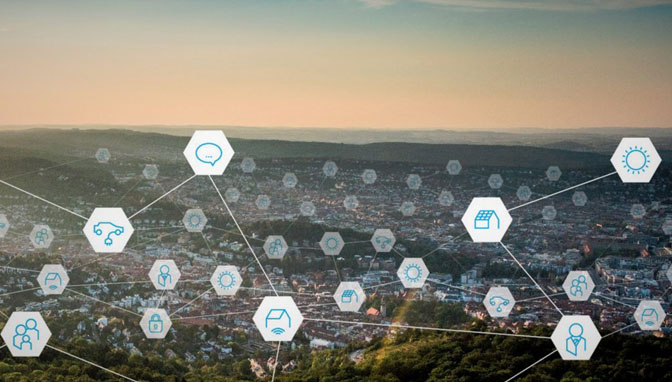







As a follow-up to the “Distribution Network 2020” research project, the “Smart Grid Cluster” project was launched in March 2019. Building on the findings from the predecessor project, the existing BPL communication infrastructure in the project area in Unterfarrnbach is being expanded to include smart meter gateways (SMGWs). In this way, the project aims to gradually transition from centralized, overarching distribution grid control to a decentralized distribution grid control system that relies on the SMGW infrastructure to securely integrate controllable flexibility resources and equipment such as PV systems, battery storage systems, and string controllers to the SMGW infrastructure.
The integration of controllable flexibility measures and assets into distribution grids, along with their intelligent control, can prevent costly grid expansion by significantly increasing the distribution grids’ capacity to accommodate “renewables.” PPC brings its many years of experience in the field of broadband powerline and smart meter gateways to the project and is responsible for establishing a reliable communications infrastructure.
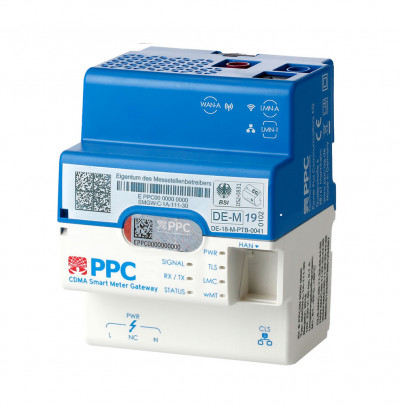
Based on BPL modems customized for this project, the equipment from the predecessor project “Distribution Network 2020” is being integrated into the distribution network control system. The special housing and unique design of the modems enhance electromagnetic compatibility against radiated interference, ensuring reliable communication even in the immediate vicinity of power electronics such as inverters. By using smart meter gateways, customer installations and equipment can be securely integrated into the communication infrastructure and the distribution network control system and controlled via the CLS channel of the smart meter gateways. This enables decentralized distribution network control within the project based on the standard communication infrastructure.
The “Smart Grid Cluster” project is funded by the BMWK. The project will run for three years (March 2019 through February 2022).