



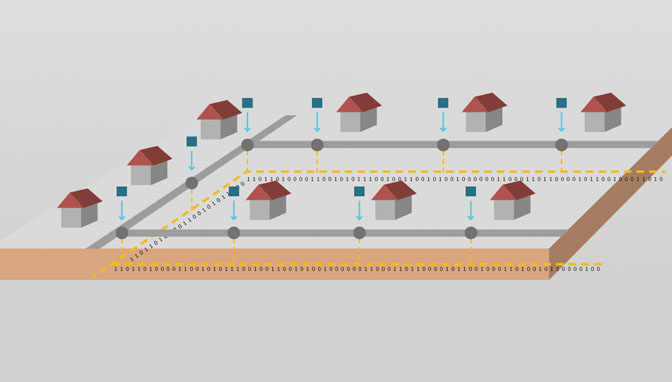









The research project “Bidirectional Charging Management – BDL” aims to develop and test a comprehensive, user-oriented solution for integrating bidirectional electric vehicles into the energy system.
Electric vehicles can play an important role in the future energy system, which is why it is necessary to develop intelligent coordination between vehicles, charging infrastructure, power grids, and electricity markets. Bidirectional electric vehicles could be charged and discharged in a way that benefits the grid and/or optimizes the share of energy from renewable sources in the power grid. To this end, the research project “Bidirectional Charging Management – BDL” utilizes the power and storage capacity of electric vehicles in various use cases.
The goal is to develop and test a comprehensive, user-oriented approach to integrating bidirectional electric vehicles into the energy system. The project partners from the automotive industry, the energy sector, and academia are designing user-friendly technical solutions for bidirectional electric vehicles and implementing them in a field test involving 50 BMW i3s.
In addition to the lead partner, the BMW Group, the following partners are involved:
PPC is supporting the project as a smart meter gateway supplier. BDL is funded by the Federal Ministry for Economic Affairs and Climate Action. The German Aerospace Center (DLR) is the lead agency for the three-year pilot project.
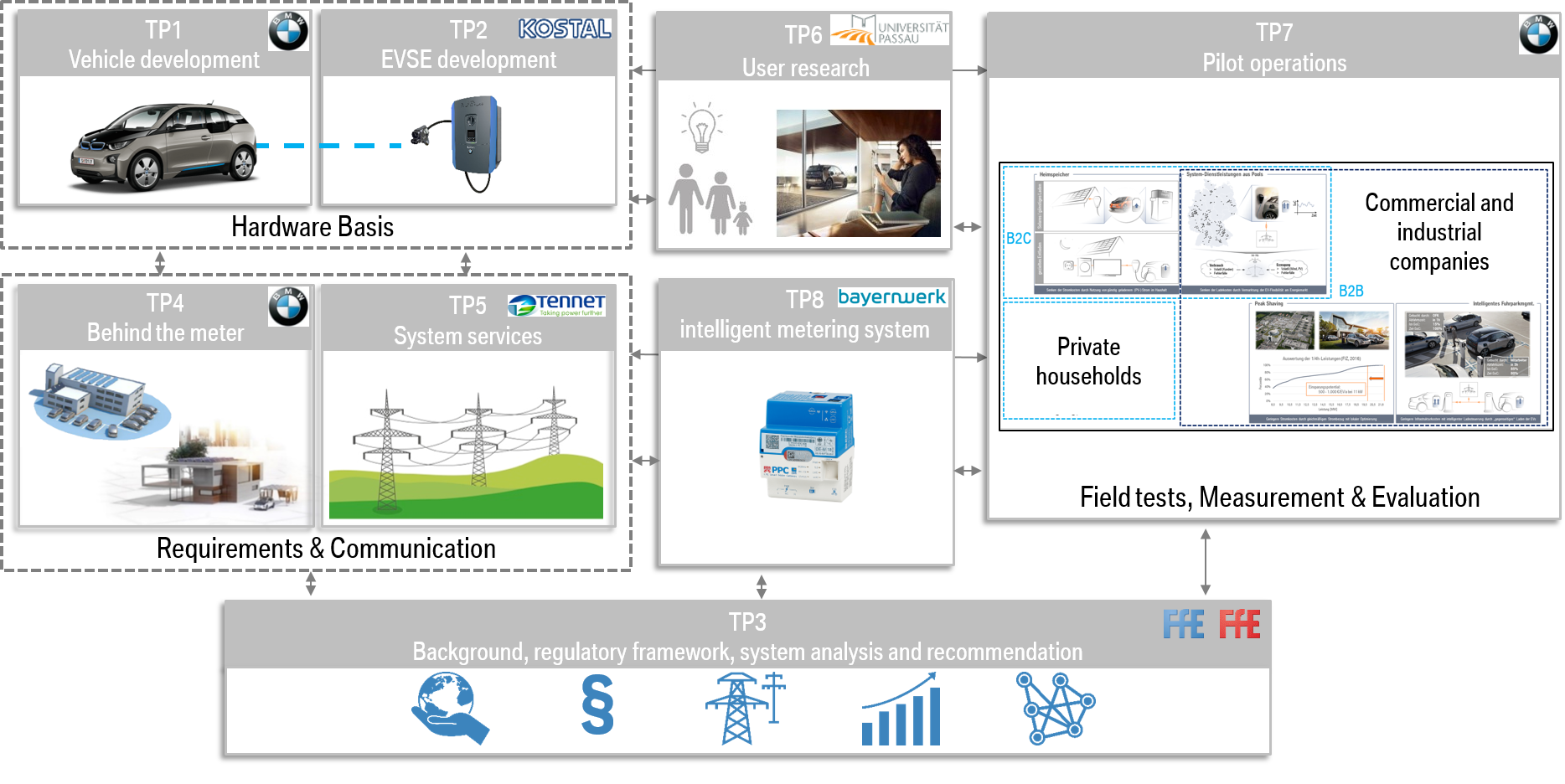
BDL is divided into eight subprojects (TP), and their interrelationships are illustrated in the following figure (Source: FfE):
Our innovation team collaborates with partners from academia and industry on various funded projects. This is where visions for the future of energy are put into practice and tested: