
As of January 1, 2024, new requirements have taken effect pursuant to the amended Section 14a of the Energy Industry Act (EnWG). The grid operator must be able to throttle new controllable consumption devices to a power output of 4.2 kW. For E3/DC’s home power plants, their integrated energy management system, and PPC’s interoperable iMSysplatform, experts from both companies were able to demonstrate in tests that users not only meet the new requirements of Section 14a but will also be able to utilize additional market-related applications as well as those that benefit the grid and the system in the future.
Mannheim/Osnabrück, February 8, 2024: The Federal Network Agency’s (BNetzA) guidelines regarding Section 14a of the Energy Industry Act (EnWG) issued last November allow grid operators to take corrective action with regard to consumers in order to prevent acute grid overloads. At the same time, consumers are granted a reduced grid fee, and grid operators are required to connect new customer installations. All electricity customers must comply with these requirements when having controllable devices such as heat pumps or electric vehicle charging stations newly installed—regardless of whether they draw all their electricity from the grid or use self-generated solar power.
Specifically, since January 1, 2024, regulations and guidelines have been in place designed to harness the enormous flexibility potential of controllable consumers. Beyond the traditional remote control signal for curtailing loads or feed-in systems, granular control requires new forms of collaboration among market participants, as well as an authorized software environment and metering infrastructure. The energy storage specialist HagerEnergy, with its E3/DC brand, and PPC, the market leader in smart meter gateways, have now taken on these new challenges to demonstrate that their products comply with the requirements of Section 14a regarding control.
Successful Tests in Accordance with the EEBUS Standard
To this end, two use cases based on the EEBUS standard were successfully tested between PPC and E3/DC. In the case of “Limitation of Power Consumption” (LPC), the grid-oriented control interventions associated with the new requirements under Section 14a of the German Energy Act (EnWG) can be modeled and implemented. If the grid operator is forced to take grid stabilization measures, the consequences for the end consumer can be mitigated through the continuous setpoint control and the reduction of grid draw via the EMS in the home power plant: Ideally, utilizing the available PV output or the discharge capacity of the storage system then allows controllable loads to continue operating at full power or with only a slight reduction in power.
In addition, another successful test was conducted with the inclusion of “generation output reduction” (LPP). The technology used for generation output reduction is key to enabling PV system operators to directly market their surplus electricity and participate in other grid- and system-supporting processes, such as the strategic purchase of electricity under dynamic electricity rates —and, in the future, in conjunction with bidirectionally chargeable electric vehicles.
Test Connection of the Home Power Plant to the iMSys Infrastructure
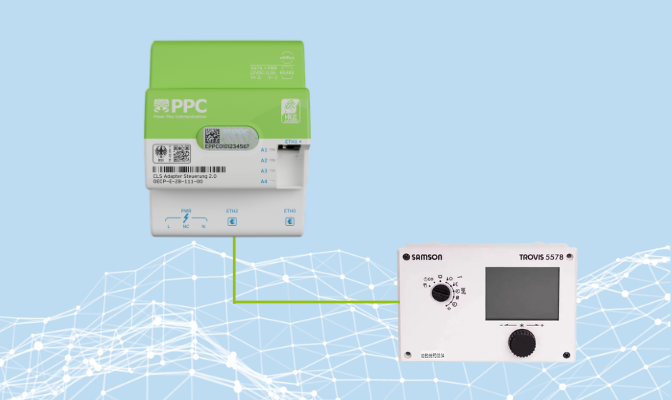
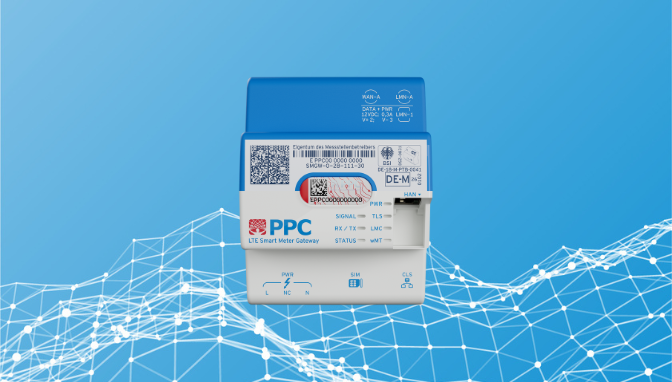
To implement the use cases described, the E3/DC energy management system—which is integrated into the home power plant—was successfully connected to PPC’s iMSys infrastructure, which consists of a smart meter gateway and a CLS gateway. On this basis, both flexible loads—such as heat pumps and electric vehicles—and generation sources—such as the PV system—can be controlled in the customer’s installation, seamlessly and interoperably across all connected device groups. The control commands required for the test were generated from the aEMT environment of the PPC test kit. E3/DC provides the necessary environment of controllable, flexible loads via the home power station.
“It was crucial for us to support the industry in implementing Section 14a as quickly as possible once it took effect,” said Julian Zilg, Innovation Manager at PPC. “To that end, we got a head start early on to prepare our hardware and software for this. We have fully aligned our solution for connecting and integrating energy management systems with the new requirements of Section 14a, which enabled us to quickly implement suitable solutions together with E3/DC.”
“Even though the home power plant is primarily designed to promote self-sufficiency—that is, to supply customers with solar power—it is crucial for us to meet the new requirements set forth in the Energy Economy Act (EnWG),” emphasizes Tobias Terhaar, Director of Development Software & Energy Management at HagerEnergy. “This ensures our customers have the best possible access to electrical power in every situation. And the required smart metering system opens up new opportunities to actively participate in the electricity market and use the storage system even more strategically, especially during the winter months.”
According to both companies, the integration of the E3/DC home power plant and the PPC iMSys platform marks the start of further joint projects this year. The goal is to overcome additional hurdles related to grid- and system-supporting control and, as a result, make these areas even more attractive. With TR-5 compliance in place and the many years of experience that E3/DC and PPC bring to the table, there should no longer be much standing in the way of the widespread and straightforward implementation of Section 14a.