


















For the energy transition to succeed, it is not enough to simply convert as much of the electricity generation capacity as possible to renewables. It is also necessary to decarbonize the transportation and heating sectors. Once a sufficiently large portion of electricity generation has been converted to renewables, this can best be achieved through the electrification of transportation and heating.
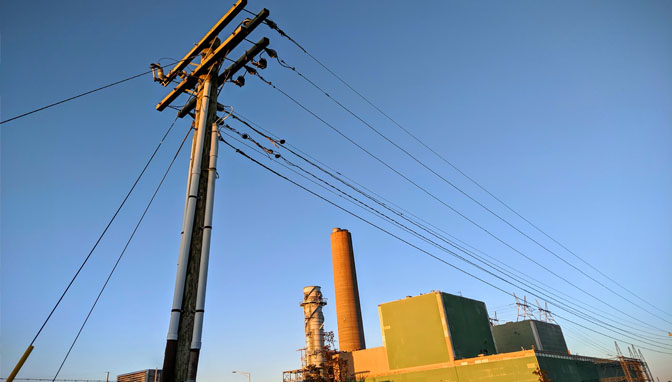
With this increasingly rapid shift in energy flows from fuel and heating networks to the electric grid, challenges are growing—especially for distribution system operators—because the new consumers are primarily connected at the low-voltage level.
Currently, low-voltage grids are being operated “blind”—without real-time measurement data from the grid, the only response to these new challenges is a resource- and cost-intensive expansion of the distribution grids “down to the last kWh.”
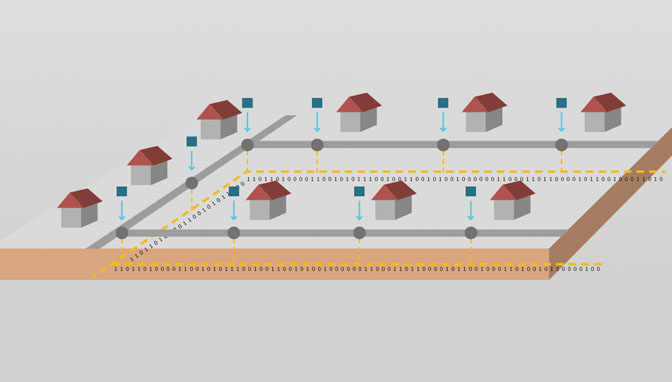
Power Plus Communications AG aims to develop and test an alternative to this approach as part of the CACTUS project—in the form of a solution for real-time observability in the low-voltage grid, which will serve as the foundation for other applications (forecasting, control, etc.) within the overall project.
The specific goals of the PPC are as follows:
• Prototype development of a real-time measurement system for the low-voltage grid
• Integration of newly collected grid status data into appropriate backend systems
• System integration at the device level for laboratory and field testing
The goal of the CACTUS project is to optimize grid utilization and energy use in the distribution grid by tapping into flexibility potentials, using charging clusters and neighborhoods as examples. The core element consists of incentives in the form of (virtual) price signals made available to decentralized, automated systems. On the one hand, this is intended to make electricity more affordable; on the other hand, using charging clusters as an example, it should make it possible to authorize higher connection capacities without expanding the grid. Through targeted communication (Connect), grid operators are supported (Assist) in two ways: first, to review and approve the connection of additional systems while taking their flexibility into account within the grid; and second, to visualize forecasted grid bottlenecks and resolve them through appropriate (virtual) price signals (Control). The algorithm adapts (virtual) price signals accordingly so that, with a high degree of probability, grid limits are maintained despite all fluctuations in generation and consumption behavior, thereby avoiding the measures specified in §13.2 (shutdowns during the “red light” phase). In this context, customer installations are free to respond to these (virtual) price signals or not.
Term: January 1 , 2023, through December 31, 2025